









How Fiber Optic Cable Powers Modern Data Center Infrastructure
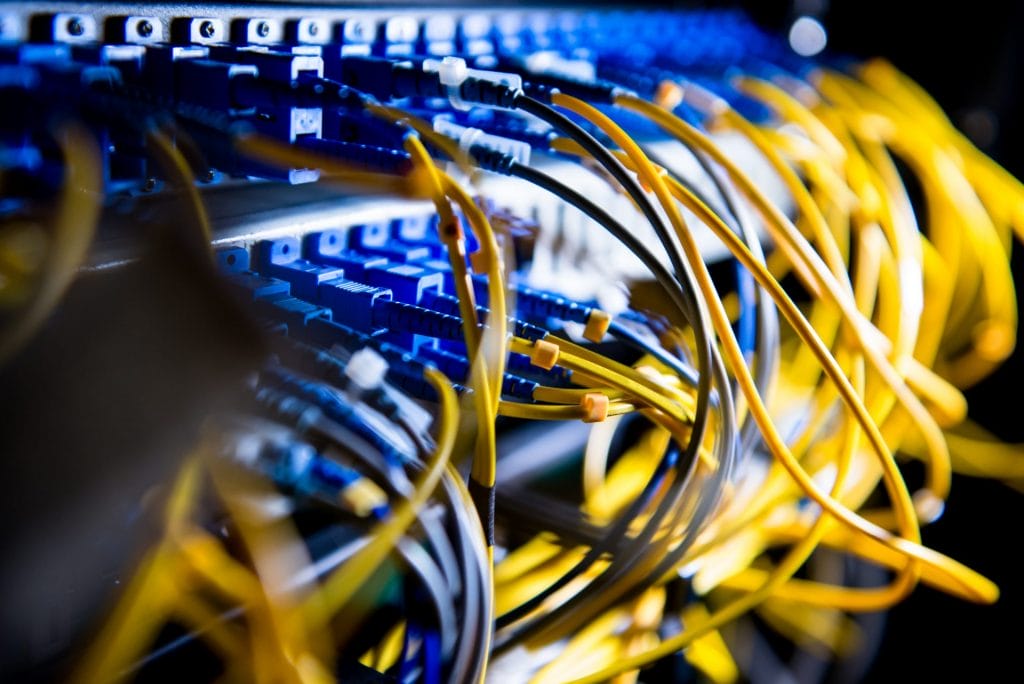
As data centers continue to scale in response to cloud computing, artificial intelligence (AI), and high-speed connectivity demands, fiber optic cable has become the foundation of modern network infrastructure. Unlike traditional copper cabling, fiber optics use light to transmit data, enabling significantly higher speeds, greater bandwidth, and lower latency. In today’s hyperscale and enterprise data centers, fiber is no longer optional — it is essential.
Why Fiber Optic Cable Is Critical in Data Centers
Data centers are designed to process, store, and transmit massive volumes of data with minimal delay. As workloads become more demanding, particularly with AI and real-time applications, the limitations of copper cabling become more apparent.
Fiber-optic cable addresses these challenges by offering:
- Ultra-high bandwidth capacity to support growing data loads
- Low latency transmission critical for real-time processing
- Long-distance signal integrity without significant loss
- Immunity to electromagnetic interference (EMI)
- Scalability for future network upgrades
These advantages make fiber the preferred medium for both short-range and long-haul connections within and between data centers.
Types of Fiber Used in Data Centers
Single-Mode Fiber (SMF)
Single-mode fiber is designed for long-distance, high-speed transmission. It uses a small core that allows light to travel in a single path, minimizing signal loss and dispersion.
Common uses:
- Data center interconnects (DCI)
- Campus and metro networks
- Long-haul communication links
Multi-Mode Fiber (MMF)
Multi-mode fiber is typically used for shorter distances within data centers. It has a larger core, allowing multiple light paths, which simplifies alignment but limits distance compared to single-mode.
Common uses:
- Server-to-switch connections
- Rack-to-rack cabling
- Intra-data center networking
Recent advancements in multi-mode fiber have improved performance, supporting higher speeds such as 40G, 100G, and beyond over shorter distances.
Fiber Architecture in Modern Data Centers
Modern data centers often use a spine-and-leaf architecture, which relies heavily on fiber-optic connectivity to ensure high-speed communication between switches and servers.
Key components include:
- Top-of-Rack (ToR) switches connecting servers within a rack
- Leaf switches aggregating rack-level traffic
- Spine switches providing high-capacity backbone connectivity
Fiber-optic cable is used extensively throughout this architecture to enable:
- high-speed interconnects
- low latency communication
- scalable network design
As data center traffic increases, fiber allows operators to upgrade speeds without replacing the entire cabling infrastructure, making it a future-proof solution.
High-Density Cabling and Space Optimization
One of the biggest challenges in data centers is space management. As equipment density increases, so does the need for efficient cable routing.
Fiber-optic cable supports high-density environments by offering:
- Smaller cable diameters compared to copper
- Higher data capacity per cable
- Reduced cable congestion
- Improved airflow and cooling efficiency
High-density fiber solutions such as ribbon cable and MPO (multi-fiber push-on) connectors allow multiple fibers to be grouped together, significantly increasing connection density while minimizing space usage.
Role in AI and Hyperscale Data Centers
The rise of AI-driven workloads is dramatically increasing network demands. AI applications require rapid data movement between servers, storage systems, and GPUs, placing extreme pressure on data center networks.
Fiber optic cable plays a critical role by enabling:
- Ultra-low latency communication between compute clusters
- High-throughput data transfer for training models
- Scalable network expansion for growing workloads
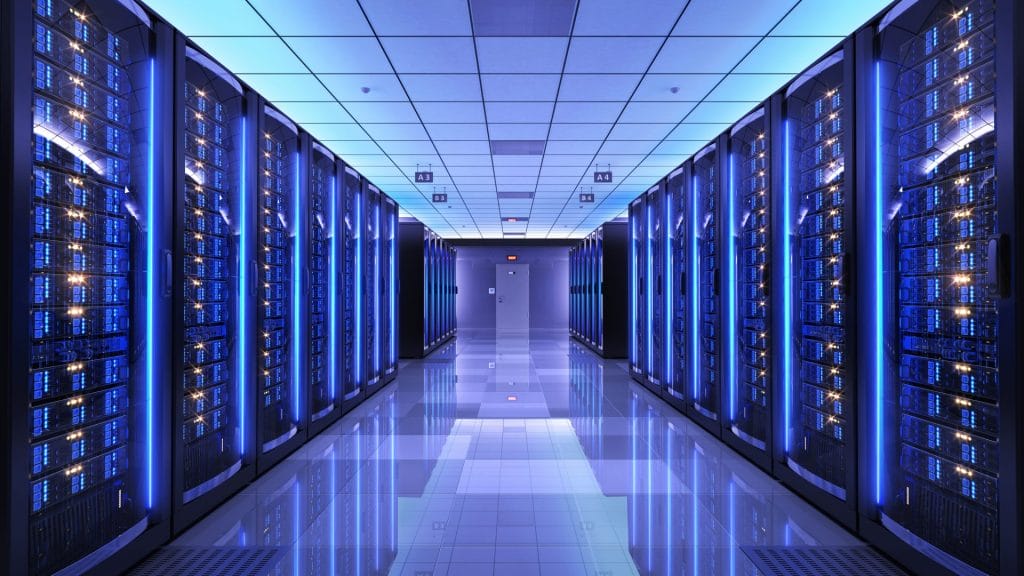
Hyperscale data centers, which can span hundreds of thousands of square feet, rely almost entirely on fiber for internal and external connectivity. As these facilities continue to expand, demand for high-performance fiber solutions continues to rise.
Reliability and Performance Advantages
Data centers require near-constant uptime, making reliability a top priority. Fiber-optic cable contributes to system reliability in several ways:
- Resistance to electromagnetic interference, ensuring stable signal transmission
- Lower error rates compared to copper
- Reduced risk of overheating due to lower electrical resistance
- Durability in high-density environments
Additionally, fiber cables generate less heat, which helps reduce cooling requirements — a major cost factor in large data centers.
Installation and Deployment Benefits
Modern fiber solutions are designed to simplify installation and reduce labor costs.
Key advancements include:
- Pre-terminated fiber-optic assemblies for plug-and-play installation
- Modular cabling systems for scalability
- Improved bend-insensitive fiber allowing tighter routing
- Color-coded and labeled systems for easier management
These innovations help accelerate deployment timelines and reduce the complexity of large-scale installations.
Future Trends in Data Center Fiber
Fiber optic technology continues to evolve to meet increasing demands. Key developments include:
- Higher-speed optical transmission (400G, 800G, and beyond)
- Hollow core fiber for ultra-low latency applications
- Silicon photonics and co-packaged optics
- Improved energy efficiency in optical components
As data consumption continues to grow, fiber will remain at the center of data center innovation.
Final Thoughts
Fiber optic cable is the backbone of modern data centers, enabling the speed, reliability, and scalability required to support today’s digital economy. From hyperscale cloud environments to enterprise facilities, fiber provides the infrastructure necessary to handle increasing data demands and emerging technologies.
As AI, cloud computing, and high-speed connectivity continue to expand, the importance of fiber optic cable will only grow. For data center operators, engineers, and infrastructure planners, investing in high-performance fiber solutions is essential to building efficient, future-ready networks.
Click to view our Fiber Products