











What Is Level 4 Cable? Understanding Its Role in Modern Building Automation
As commercial buildings become smarter, more connected, and increasingly energy efficient, the communication infrastructure behind these systems has never been more important. While most contractors are familiar with Ethernet, fiber optic cable, and BACnet cabling, another term occasionally appears in HVAC and building automation specifications: Level 4 cable.
Although “Level 4” is not an official National Electrical Code (NEC) or TIA cable category, it is a recognized specification within portions of the building automation industry—particularly for LonWorks® communication networks and certain high-performance control systems. Understanding what Level 4 cable is, where it is used, and why it matters can help contractors avoid communication issues while ensuring reliable building automation performance.
What Is Level 4 Cable?
Level 4 cable is a specialized communication cable designed for building automation and control networks. Unlike Category 5e or Category 6 Ethernet cable, which are optimized for IP networking, Level 4 cable is engineered for field-level communication protocols that connect controllers, sensors, actuators, and HVAC equipment.
The term “Level 4” is most commonly associated with LonWorks® systems, although similar cable constructions are also used in various BACnet and industrial control applications.
Why Building Automation Depends on Reliable Communication
Today’s commercial buildings contain thousands of intelligent devices that must communicate continuously.
These include:
- HVAC controllers
- Variable Air Volume (VAV) boxes
- Chillers
- Boilers
- Lighting controllers
- Occupancy sensors
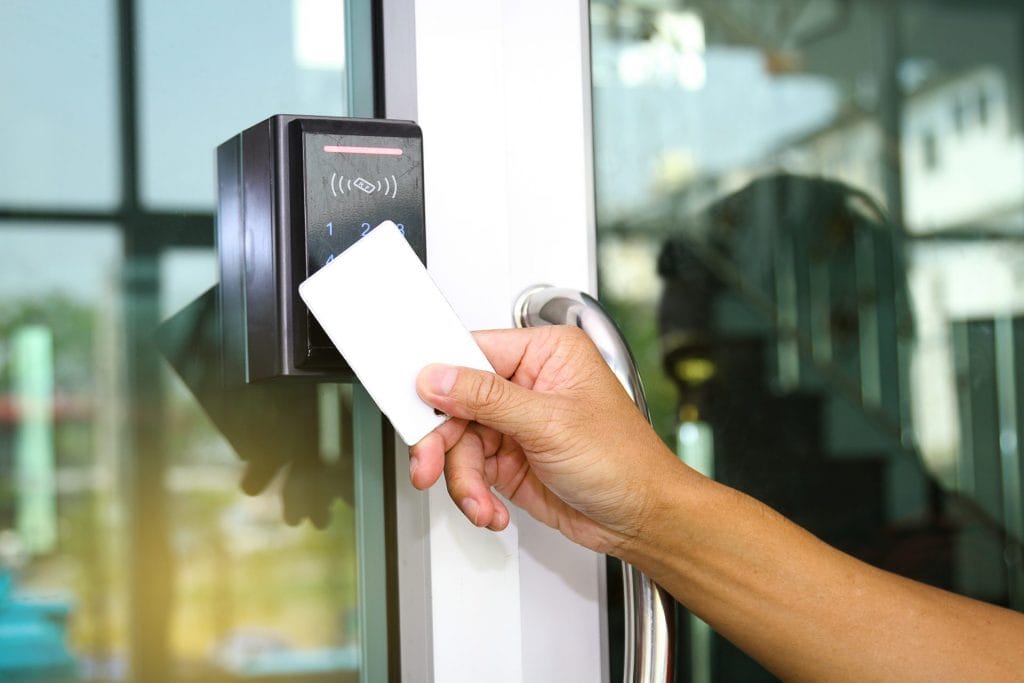
- Access control systems
- Energy management systems
According to the BACnet Committee, BACnet is implemented in hundreds of thousands of buildings worldwide, while market studies indicate it is specified in more than 60% of building automation projects globally.
Major manufacturers supporting these systems include:
- Johnson Controls
- Honeywell
- Siemens
- Schneider Electric
- Automated Logic
- Trane
- Carrier
- Distech Controls
Regardless of the manufacturer, reliable communication depends on selecting the proper cable.
Typical Construction of Level 4 Cable
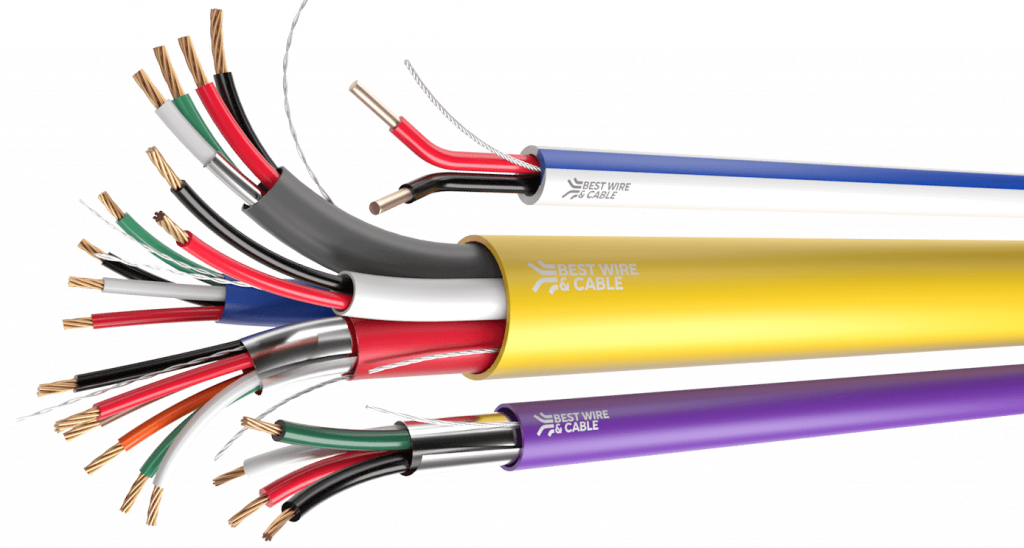
Although specifications vary slightly by manufacturer, most Level 4 communication cable includes:
Conductor
- 22 AWG stranded bare copper
- Typically 7-strand construction for flexibility
Pair Configuration
- 1 twisted pair
- Occasionally 2-pair versions
Characteristic Impedance
Most products maintain an impedance between:
- 100–120 Ω
This helps maintain signal integrity over long communication runs.
Voltage Rating
Most Level 4 communication cable carries a:
- 300 Volt rating
Jacket Options
Available in:
- CMP (Plenum)
- CMR (Riser)
- CM
- Indoor/Outdoor
Insulation
Common insulation materials include:
- FEP
- PVC
Many plenum versions utilize FEP insulation because of its excellent fire performance.
Why Twisted Pair Matters
One of the defining features of Level 4 cable is its twisted-pair construction.
Twisting the conductors helps reject electromagnetic interference (EMI) generated by:
- Motors
- Variable Frequency Drives (VFDs)
- Transformers
- Lighting systems
- Electrical panels
Without twisted pairs, communication errors become much more likely, especially inside mechanical rooms where electrical noise levels are high.
Low Capacitance Improves Performance
Many Level 4 cables are engineered with low capacitance, a characteristic that allows communication signals to travel longer distances with less distortion.
Lower capacitance provides several advantages:
- Better signal quality
- Faster signal transitions
- Longer network distances
- Improved communication reliability
- Reduced data errors
This becomes especially important on large campuses containing hundreds of HVAC controllers.
Where Is Level 4 Cable Used?
Level 4 cable is commonly installed in:
- Hospitals
- Universities
- Airports
- Manufacturing plants
- Office towers
- Schools
- Hotels
- Data centers
These facilities often contain thousands of control points that continuously exchange information regarding temperature, humidity, airflow, occupancy, and energy consumption.
Level 4 vs. Category Cable
Many people assume any twisted-pair cable can be used for building automation. That is not necessarily true.
| Feature | Level 4 Cable | Cat6 Cable |
|---|---|---|
| Primary Use | Building Automation | Ethernet Networking |
| Typical AWG | 22 AWG | 23 AWG |
| Communication | LonWorks, Controls | TCP/IP |
| Optimized For | Long control networks | High-speed data |
| Typical Environment | HVAC Controls | Office LANs |
While Cat6 excels at carrying Ethernet traffic, it is not always the correct choice for proprietary or field-level control networks.
Real-World Applications
A modern office building may include:
- 300 VAV controllers
- 50 rooftop units
- 25 air handlers
- 200 occupancy sensors
- Multiple boilers
- Chillers
- Lighting controllers
Each device continuously communicates with a Building Automation System (BAS).
If poor-quality communication cable introduces intermittent data loss, facility managers may experience:
- Incorrect temperature readings
- Equipment alarms
- Delayed controller responses
- Increased troubleshooting time
- Reduced energy efficiency
Selecting the proper communication cable during installation helps minimize these issues.
Building Automation Is a Growing Market
The demand for smart buildings continues to grow rapidly.
Commercial building owners are investing heavily in:
- Energy efficiency
- Occupant comfort
- Predictive maintenance
- Remote monitoring
- Integrated security
- Indoor air quality
BACnet International notes that more than 1,300 products have successfully completed BACnet conformance testing, highlighting the maturity and broad adoption of interoperable building automation devices.
As these systems become more sophisticated, the communication infrastructure supporting them becomes increasingly important.
Choosing the Right Cable
When specifying cable for a building automation project, contractors should verify:
- Correct protocol compatibility
- Required impedance
- Low-capacitance design
- Proper jacket rating (CMP, CMR, or CM)
- Conductor size
- Shielding requirements
- Installation environment
Using cable specifically designed for building automation networks helps reduce commissioning problems and supports reliable long-term performance.
Final Thoughts
Although Level 4 cable is not a standardized TIA cable category like Cat5e or Cat6, it remains an important communication cable in many building automation applications, particularly LonWorks® networks and certain HVAC control systems. Its combination of 22 AWG stranded conductors, twisted-pair construction, controlled impedance, and low-capacitance design makes it well suited for reliable communication between controllers, sensors, and other field devices.
Click to view our Controls & Automation Products.