







The Cable Infrastructure Powering Cloud Computing and AI
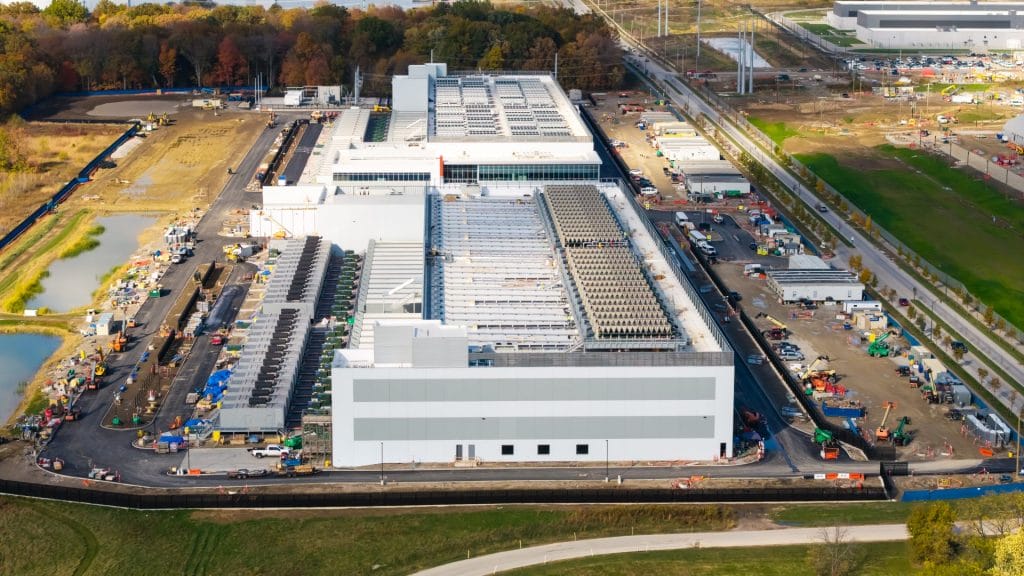
Artificial intelligence, cloud computing, streaming, financial systems, healthcare platforms, social media, autonomous systems, and nearly every digital service in modern life now depend on one critical piece of infrastructure: the data center.
As AI adoption accelerates across the globe, hyperscale data centers are becoming some of the largest and most power-hungry industrial facilities ever constructed. While most conversations focus on GPUs, chips, and software, the real foundation of these facilities is physical infrastructure — especially wire and cable.
Behind every AI model, cloud application, and digital transaction is an enormous network of copper cabling, fiber optics, power distribution systems, cooling infrastructure, life safety wiring, security systems, and control cables operating around the clock.
In many ways, data centers are no longer just “server buildings.” They are industrial-scale electrical ecosystems.
Data Centers Are Growing at an Explosive Rate
The global demand for data center capacity is increasing at historic levels due to AI and cloud computing growth. According to McKinsey & Company, global data center demand is expected to grow at a compound annual growth rate of approximately 22% through 2030, with worldwide investment projected to reach trillions of dollars.
AI workloads are the primary driver behind this expansion. Traditional servers already consumed significant power, but AI GPU clusters require dramatically more energy, cooling, and connectivity. Some AI racks now consume more than 100 kW per rack, while next-generation deployments may exceed 1 MW per rack in the future.
This creates a massive increase in demand for:
- Power cable
- Fiber optic cable
- Structured cabling
- Cooling system wiring
- Control cable
- Fire alarm cable
- Security cable
- Grounding and bonding systems
- Backup power infrastructure
Every one of these systems depends heavily on copper and fiber connectivity.
A Single Data Center Requires Millions of Feet of Cable
Modern hyperscale data centers contain enormous quantities of wire and cable throughout the facility.
A large hyperscale campus may include:
- Thousands of server racks
- Hundreds of miles of fiber optic cable
- Massive power distribution systems
- Redundant backup power infrastructure
- Cooling systems operating 24/7
- Sophisticated security and life safety networks
Industry estimates suggest that AI-focused facilities may consume between 30 to 40 metric tons of copper per megawatt, with some facilities using substantially more depending on density and cooling design.
To put that into perspective, a 100 MW hyperscale AI campus could require thousands of tons of copper embedded across:
- Medium-voltage feeders
- Busways
- Grounding systems
- Data cabling
- Power whips
- Liquid cooling systems
- Transformers
- Security systems
- Building automation systems
And that does not include utility-side infrastructure required to feed the facility from the electrical grid.
Fiber Optics: The Nervous System of AI Infrastructure
Fiber optic cable has become the primary communication backbone inside modern data centers.
AI workloads generate enormous data flows between:
- GPU clusters
- Servers
- Switches
- Storage systems
- Network fabrics
This is pushing rapid adoption of:
- 400G Ethernet
- 800G Ethernet
- Emerging 1.6T architectures
According to industry research, optical fiber now represents the largest segment of the data center cable market due to demand for ultra-low latency and high-bandwidth communication.
The scale is becoming so large that even major technology companies are investing directly into fiber manufacturing. Recently, Jensen Huang and NVIDIA announced major investments into new U.S.-based optical fiber production facilities to support future AI infrastructure growth.
Without fiber infrastructure, AI data centers simply cannot function.
Cooling Systems Are Becoming Massive Cable Consumers
One of the least discussed aspects of AI infrastructure is cooling.
AI GPUs generate enormous amounts of heat, and modern facilities require increasingly advanced cooling systems to maintain safe operating temperatures.
Cooling infrastructure now includes:
- Liquid cooling pumps
- Chillers
- Cooling towers
- Heat exchangers
- Sensors
- Automated control systems
- Monitoring systems
- Redundant backup systems
Each of these systems requires extensive wiring for:
- Power delivery
- Controls
- Instrumentation
- Monitoring
- Communications
Copper is especially important because of its thermal conductivity and electrical performance. Industry analysts note that copper is heavily used not only in electrical systems, but also in liquid cooling components and heat exchangers.
As AI compute density increases, cooling systems will continue expanding — and so will the amount of cable required to support them.
Life Safety and Security Infrastructure Cannot Be Overlooked
Data centers cannot operate without highly sophisticated life safety systems.
These facilities require:
- Fire alarm cable
- Emergency communication systems
- Access control wiring
- Surveillance infrastructure
- Smoke detection systems
- Monitoring systems
- Backup communication pathways
Because downtime can cost millions of dollars per hour, data centers are built with extreme redundancy.
Nearly every critical system includes:
- Primary pathways
- Backup pathways
- Redundant power
- Secondary communications
This redundancy dramatically increases the amount of wire and cable installed throughout the facility.
Data Centers Never Stop Evolving
One of the most important aspects of the data center industry is that cable demand does not end once construction is complete.
Unlike traditional buildings, data centers are constantly evolving.
Operators continually upgrade:
- GPUs
- Networking hardware
- Switching equipment
- Cooling systems
- Security systems
- Power systems
- Automation systems
As AI chips become more powerful, they require:
- Higher power density
- Faster interconnects
- More cooling
- Additional fiber capacity
This means facilities are frequently retrofitted with:
- New fiber trunks
- Additional power cabling
- Upgraded busways
- Enhanced cooling infrastructure
- Expanded controls and monitoring systems
Even after a data center becomes operational, cable demand continues for years through expansions, retrofits, and technology refresh cycles.
The Data Center Boom Is Becoming a Massive Opportunity for the Wire & Cable Industry
The rise of AI infrastructure is creating one of the largest long-term opportunities the wire and cable industry has seen in decades.
Data centers require virtually every category of cable:
- Fiber optic
- Low voltage
- Medium voltage
- Control cable
- Security cable
- Fire alarm cable
- Coaxial cable
- Specialty cooling system cable
- Grounding and bonding products
According to industry forecasts, data center cable demand is expected to continue rising significantly through the end of the decade as AI adoption expands globally.
The challenge is not only technological — it is also material. Analysts are already warning about potential global copper shortages driven by AI infrastructure expansion.
Click below to see what we can offer for your Data Center